
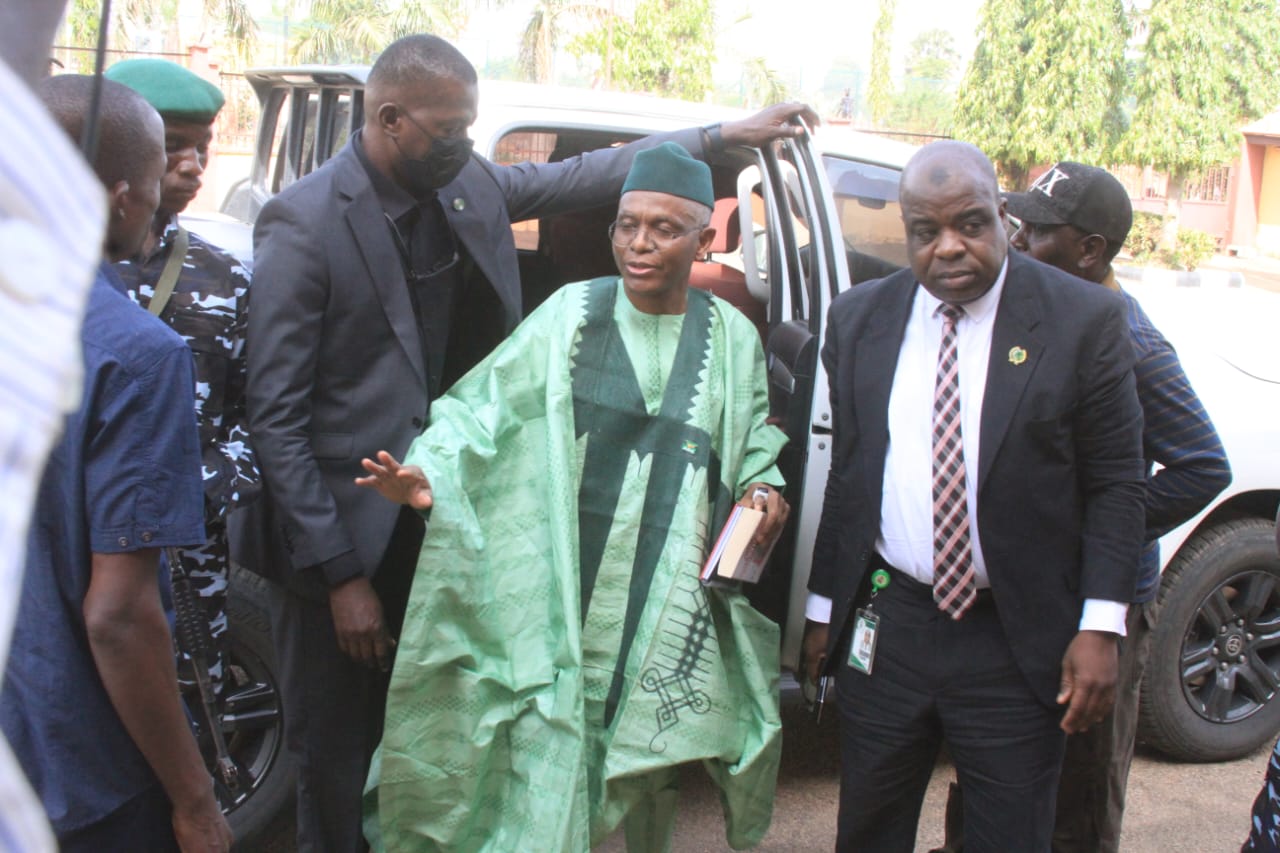
A Federal High Court sitting in Kaduna has adjourned the bail hearing of former Kaduna State Governor, Nasir El-Rufai, to March 31, 2026, following arguments presented by both the prosecution and defense.
The adjournment comes after a closely watched court session on Tuesday, where legal representatives debated whether the former governor should be granted bail amid ongoing corruption allegations.
Defense Pushes for Bail
During the proceedings, counsel to El-Rufai, Ukpon Akpan, urged the court to grant bail, emphasizing that bail is a constitutional right. He argued that allowing the former governor to remain free would enable him to adequately prepare his defense.
The defense maintained that there was no sufficient justification to deny bail, noting that El-Rufai has complied with legal processes and poses no flight risk.
Prosecution Opposes Application
However, the prosecution strongly opposed the bail request, citing the serious nature of the charges against the former governor.
According to prosecutors, granting bail at this stage could potentially interfere with ongoing investigations. They urged the court to consider the weight of the allegations before making a decision.
Details of the Charges
The Independent Corrupt Practices and Other Related Offences Commission (ICPC) has arraigned El-Rufai over multiple charges linked to his tenure as governor of Kaduna State.
The charges include:
Alleged corruption
Abuse of office
Money laundering
Conversion and possession of public property
The case is filed under suit number FHC/KD/73/2026.
Separate Case Filed at State High Court
In a related development, the ICPC has also filed a separate case against El-Rufai and another individual, Amadu Sule, at the Kaduna State High Court.
The second case, marked KDH/KAD/ICPC/01/26, includes allegations of:
Fraud
Abuse of office
Intent to commit fraud
Conferring undue advantage
The Commission confirmed that both cases were instituted on March 18, 2026, as part of its broader anti-corruption efforts.
Heightened Security and Restricted Access
Security was significantly tightened across Kaduna ahead of the arraignment. Armed personnel were deployed around the court premises to maintain order as supporters and observers gathered.
Notably, journalists were barred from entering the courtroom, raising concerns about transparency in a case of high public interest.
What Happens Next?
The court is expected to rule on El-Rufai’s bail application on March 31, 2026, a date that is now drawing national attention.
Legal analysts say the outcome could have wider implications for Nigeria’s anti-corruption drive and judicial independence, especially in cases involving high-profile political figures.
