
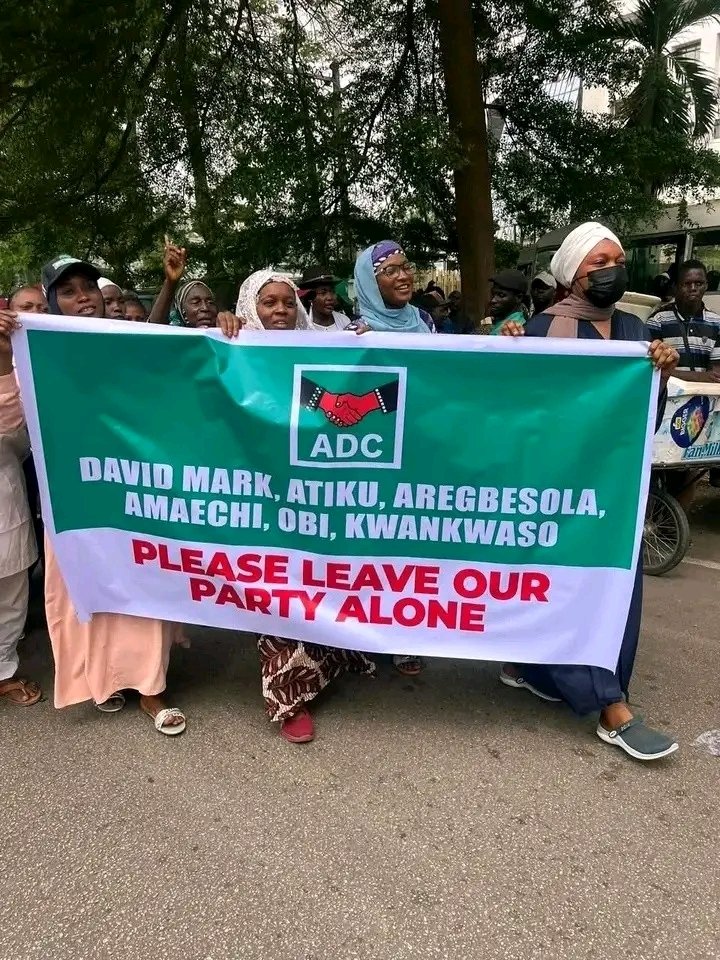
Tensions within the African Democratic Congress (ADC) escalated on Thursday as a factional National Chairman, Nafiu Bala Gombe, staged a protest in Abuja, calling on prominent political figures to stay away from the party’s affairs.
Gombe, who led a group of supporters to demonstrate in the Federal Capital Territory, accused former Vice President Atiku Abubakar, former Senate President David Mark, Labour Party’s Peter Obi, and former Kano State Governor Rabiu Kwankwaso of attempting to interfere in the internal structure of the ADC.
Chanting solidarity slogans and holding placards, the protesters urged the political heavyweights to “leave ADC alone,” insisting that the party’s leadership and direction should not be influenced by external interests.
Speaking during the protest, Gombe maintained that the ADC remains an independent political platform and warned against what he described as “political opportunism” by individuals allegedly seeking to use the party for personal ambitions ahead of future elections.
“ADC is not a dumping ground for politicians looking for convenience. We have structures, leadership, and a clear vision that must be respected,” he said.
The protest also drew the participation of Leke Abejide, a serving member of the House of Representatives under the ADC, who expressed support for Gombe’s position.
Abejide emphasized the need to protect the party’s identity and internal processes, noting that any form of external imposition could destabilize the party and undermine its credibility.
The development comes amid growing speculation about possible political realignments ahead of the 2027 general elections, with several opposition figures reportedly exploring new alliances and platforms.
While none of the named political leaders have officially responded to the protest, the incident highlights deepening divisions within the ADC and raises fresh questions about the party’s unity and future direction.
Political analysts say the unfolding situation reflects broader tensions within Nigeria’s opposition landscape, as parties and key actors reposition themselves in preparation for the next electoral cycle.
As the situation develops, stakeholders within the ADC are expected to clarify the party’s leadership structure and address concerns over external influence.
