
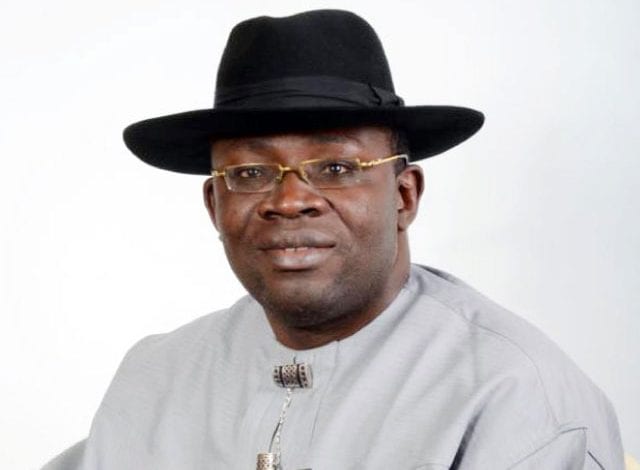
Former Bayelsa State Governor and Senator representing Bayelsa West, Seriake Dickson, has called on Nigerians to vote out the ruling All Progressives Congress (APC) in the 2027 general elections, citing what he described as the party’s failure to improve the country’s condition.
Dickson made the remarks on Tuesday during an appearance on Channels Television’s Politics Today, where he criticised the APC-led federal government over its handling of key national issues, including the economy, insecurity, and corruption.
According to the lawmaker, the APC came into power in 2015 without a clear developmental agenda, arguing that its primary objective at the time was to unseat the Peoples Democratic Party (PDP) and former President Goodluck Jonathan.
“They gathered together for the sake of removing the PDP and President Jonathan, and look at where we are,” Dickson said. “No one asked what the plan was after winning power. They simply said ‘change,’ but change can go both ways — from bad to worse.”
He maintained that despite criticisms of the PDP before 2015, the current situation in Nigeria reflects a deterioration across multiple sectors.
“If you say PDP was bad — whether in terms of corruption or insecurity — what do we have now? People are talking about figures in trillions. On the economy, on security, on fighting corruption, on deepening democracy — the APC has not delivered,” he added.
Dickson also accused the ruling party of failing to respect Nigeria’s diversity, stressing that inclusive governance remains critical to national unity and development.
The APC rose to power in 2015 on a platform anchored on three key promises: tackling corruption, reviving the economy, and addressing insecurity. However, critics have increasingly questioned the party’s performance over the years, arguing that many of these challenges persist or have worsened.
While the APC has defended its record, pointing to reforms and interventions across sectors, opposition figures like Dickson insist that the country requires a new direction.
With political activities gradually building ahead of the 2027 general elections, Dickson’s comments add to the growing debate over governance, accountability, and the future of Nigeria’s democracy.
